
It can be surprising — even alarming — to soak fresh strawberries in salt water and suddenly notice tiny white, thread-like worms wriggling out of the fruit. Before discarding the entire batch, it helps to understand what is actually happening. This phenomenon is not caused by the salt water itself. Instead, the salt solution simply reveals something that may already be present inside the fruit.
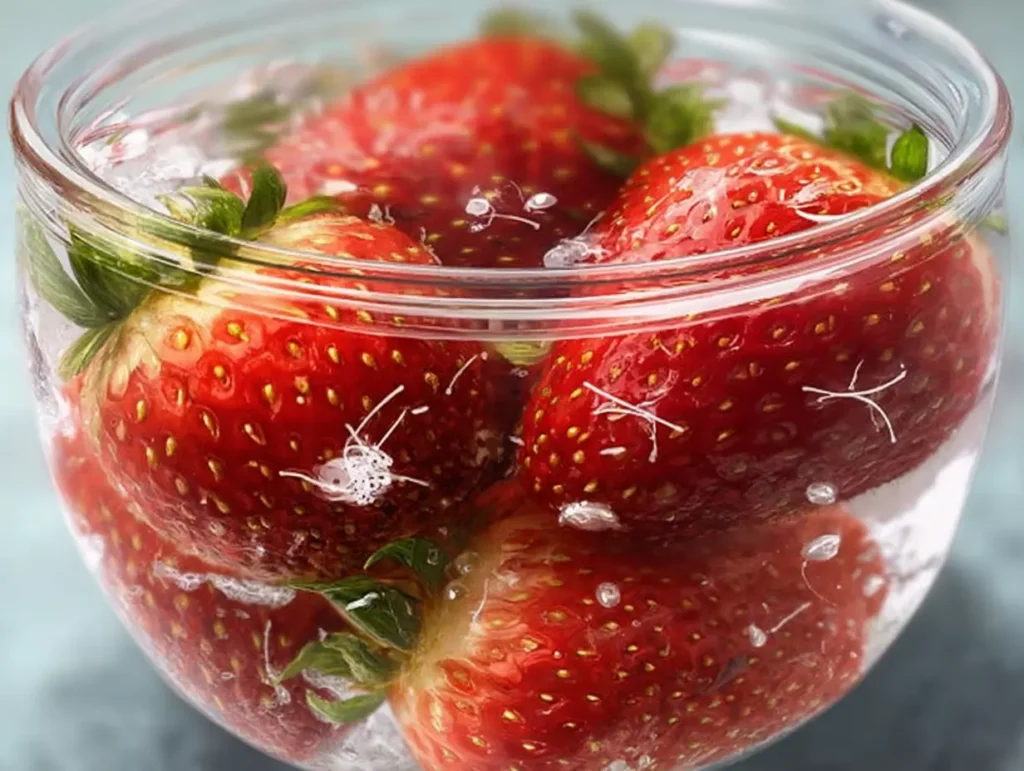
These small white larvae are typically the immature stage of the Spotted Wing Drosophila, a type of fruit fly known for laying its eggs inside soft-skinned fruits such as strawberries, raspberries, blueberries, and blackberries.
How Do They Get Inside Strawberries?
Unlike common fruit flies that deposit eggs only on overripe or rotting produce, the Spotted Wing Drosophila has a specialized serrated egg-laying organ that allows it to pierce fresh, ripening fruit. This adaptation enables the insect to lay eggs directly beneath the surface of healthy-looking strawberries.
Once the eggs hatch, the tiny larvae develop inside the fruit, feeding on the soft interior. Because strawberries are naturally porous and delicate, they are especially vulnerable — particularly when grown outdoors where insects are part of the surrounding ecosystem.
Why Salt Water Makes Them Come Out
When strawberries are soaked in salt water, several things happen:
The salt creates a high-salinity environment that is uncomfortable for small organisms.
The larvae react to this sudden environmental change.
They instinctively wriggle out of the fruit in an attempt to escape.
It is important to note that salt water does not create or attract the worms. It simply makes existing larvae visible by encouraging them to exit the fruit.
Is This Common?
Yes, this occurrence is relatively common, especially in homegrown, farmers market, or organic berries where pesticide use is limited or absent. Even commercially grown strawberries can occasionally contain larvae, though agricultural controls significantly reduce the likelihood.
The larvae are typically:
Very small, usually only a few millimeters long
White or translucent in appearance
Soft-bodied and legless
Are They Harmful?
While unpleasant to see, these larvae are not known to be dangerous if accidentally consumed. In many cases, people may unknowingly ingest them without experiencing any health effects. The digestive system safely breaks down such organic material.
That said, most people understandably prefer to remove them before eating their fruit. The reaction is largely psychological rather than medical.
How to Reduce the Risk
Although it is impossible to guarantee that fresh berries are completely insect-free, a few simple steps can significantly reduce the likelihood:
Rinse strawberries thoroughly under running water.
Soak them in a salt-water solution (approximately 1 teaspoon of salt per cup of water) for 5 to 10 minutes.
Rinse again with clean water after soaking.
Refrigerate promptly, as colder temperatures slow egg development and larval activity.
It also helps to inspect berries carefully and discard any that appear overly soft, bruised, or damaged, as these are more susceptible to infestation.
A Reminder About Fresh Produce
Discovering larvae in strawberries can feel unsettling, but it also serves as a reminder that fresh produce is grown outdoors in natural environments. Fruits are exposed to insects, weather conditions, and agricultural ecosystems long before they reach grocery store shelves.
Perfect appearance does not always mean insect-free, and minor insect presence is a natural part of farming. In some cases, the presence of larvae may even indicate minimal chemical treatment during cultivation.
Final Thoughts
Seeing tiny white worms emerge from strawberries in salt water can be surprising, but it is a known and natural occurrence associated with fruit flies like the Spotted Wing Drosophila. A simple soak and rinse can help clean your berries and provide peace of mind before consumption.
While it may not be the most appetizing discovery, it offers insight into how food grows and the realities of natural agriculture. Understanding the reason behind it transforms a shocking moment into an informative one — and allows you to enjoy fresh strawberries with greater awareness and confidence.