
Oregano is best known as a flavorful Mediterranean herb, but its concentrated essential oil has attracted considerable interest from researchers studying natural antimicrobial compounds. Oregano oil, particularly oil derived from Origanum vulgare, contains plant chemicals that have demonstrated antibacterial, antifungal, antioxidant, and antiparasitic activity in laboratory research.
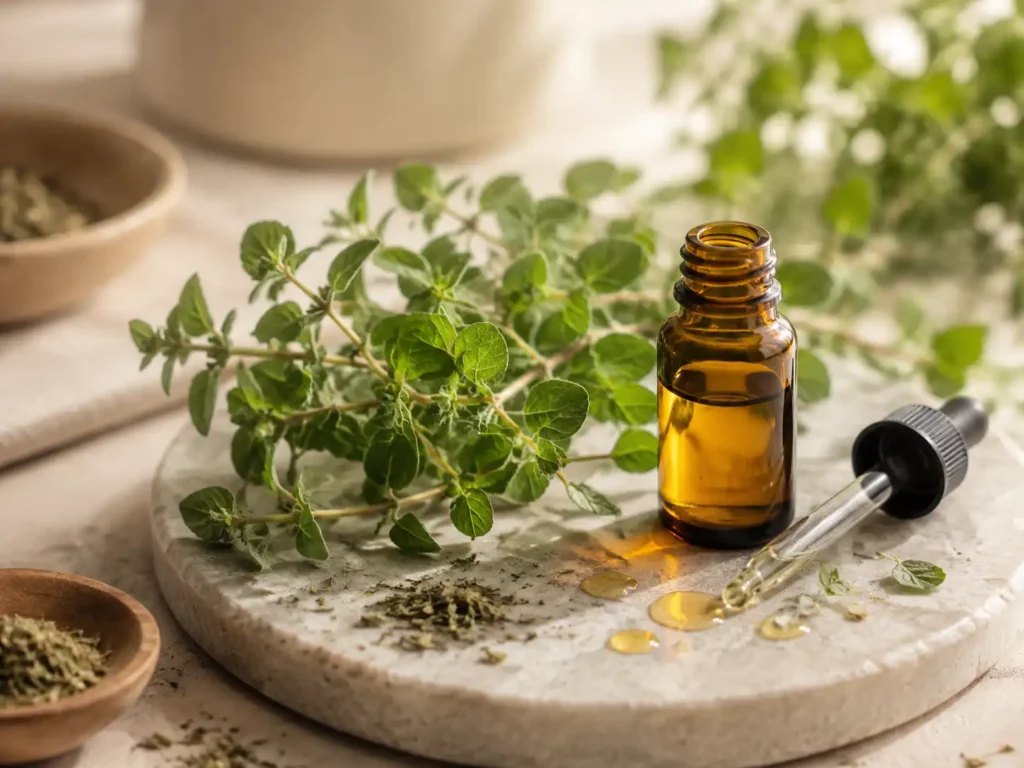
That sounds promising, but there is an important distinction between laboratory findings and proven treatments for people. Some experiments have produced striking results against microorganisms, yet human clinical evidence remains limited. Oregano oil should therefore be viewed as a subject of ongoing research and, when appropriate, a complementary option—not as a substitute for diagnosis or medical treatment.
So what makes this intensely aromatic oil interesting, what has research actually found, and how can it be used without unnecessary risk? Here is a closer look.
Why Oregano Oil Gets So Much Scientific Attention
Oregano essential oil is highly concentrated compared with the dried herb used in cooking. Two of its most studied compounds are carvacrol and thymol. These naturally occurring phenolic compounds are responsible for much of oregano oil’s characteristic aroma and have been investigated for their effects on microorganisms and oxidative processes.
Laboratory research suggests that these compounds can interfere with microbial cell membranes and other cellular processes. In practical terms, that may make it harder for certain bacteria, fungi, and parasites to survive or reproduce.
Researchers are particularly interested in this broad activity because microorganisms can differ substantially in how they respond to conventional treatments. However, laboratory activity does not automatically mean that taking oregano oil will eliminate an infection in a human body. Absorption, dosage, metabolism, safety, and the location of an infection all matter.
What Research Says About Parasites
One area of investigation is the effect of oregano essential oil on Toxoplasma gondii, the parasite responsible for toxoplasmosis. Research published in 2024 examined oregano essential oil in laboratory conditions and reported substantial effects on parasite viability.
The researchers observed that the oil affected the parasite through several biological pathways, including oxidative stress, disruption of mitochondrial function, and processes associated with cell death. These findings help explain why oregano oil continues to attract interest as a potential antiparasitic compound.
Still, there is a major limitation: findings from laboratory experiments cannot be treated as proof that oregano oil can cure toxoplasmosis in people. Toxoplasmosis can be particularly serious in certain circumstances, including during pregnancy and for people with weakened immune systems. Suspected infection requires appropriate medical evaluation rather than self-treatment with essential oils.
Could Oregano Oil Help With Urinary Tract Bacteria?
Urinary tract infections are commonly caused by bacteria such as Escherichia coli. Other organisms, including Pseudomonas aeruginosa and Proteus species, can also be involved in urinary infections.
Laboratory research has investigated oregano essential oil against several bacteria associated with urinary tract infections. Some studies have found that particular oil fractions can interfere not only with bacterial growth but also with bacterial motility—the movement that can help microorganisms colonize and spread through the urinary tract.
Carvacrol- and thymol-rich fractions have attracted particular attention in this research. Some experimental preparations produced very strong reductions in bacterial motility under laboratory conditions.
There is also research examining oregano compounds alongside conventional antibiotics. Certain laboratory experiments suggest that combinations may enhance antibacterial activity against some resistant bacteria. This is an interesting research direction, but it does not mean people should combine oregano oil with prescription antibiotics on their own. Medication combinations should be discussed with a healthcare professional.
Other Potential Properties Being Studied
The possible uses of oregano oil extend beyond urinary and parasitic research. Scientists have investigated several other biological effects, although the strength of evidence varies considerably.
- Antibacterial activity: Oregano oil has demonstrated activity against different types of bacteria in laboratory experiments, including some strains that are difficult to treat.
- Antifungal effects: Laboratory studies have examined oregano oil against fungi, including species of Candida.
- Antioxidant activity: Compounds such as carvacrol and thymol can participate in antioxidant activity and may help neutralize certain reactive molecules in experimental systems.
- Anti-inflammatory potential: Experimental research suggests that oregano constituents may influence biological pathways involved in inflammation.
- Parasitic skin infections: Animal research involving Leishmania amazonensis has produced encouraging findings, but these results remain preliminary and should not be interpreted as proof of an effective human treatment.
Different Ways Oregano Is Used
Not every product labeled “oregano oil” is the same. Understanding the difference between culinary oregano, oregano essential oil, and dietary supplements is important because their concentrations can vary dramatically.
Oregano Essential Oil
Essential oil is extremely concentrated. It should never be treated like ordinary cooking oil, and swallowing undiluted essential oil can be dangerous. Products intended for topical use should be diluted according to the manufacturer’s directions or guidance from a qualified professional.
Oil of Oregano Supplements
Capsules and other dietary supplements may contain oregano oil in a diluted or specially formulated preparation. Their concentrations, ingredients, and recommended serving sizes differ between products, so the label should be checked carefully.
Oregano as a Culinary Herb
Using oregano as a seasoning is very different from taking concentrated oregano oil. Adding dried or fresh oregano to meals is a traditional and relatively mild way to enjoy the herb’s flavor and naturally occurring plant compounds.
How to Approach Oregano Oil Safely
The biggest mistake with essential oils is assuming that “natural” automatically means harmless. Concentrated oregano oil can be irritating and may cause unwanted reactions when used incorrectly.
- Do not apply pure essential oil directly to the skin. Concentrated oregano oil may cause significant irritation, burns, or blistering.
- Do not swallow undiluted essential oil. Essential oils are highly concentrated substances and are not equivalent to culinary oregano.
- Be alert for allergic reactions. Oregano and other plants in the same botanical family can cause sensitivity in some people.
- Use extra caution during pregnancy and breastfeeding. The safety of medicinal doses has not been adequately established.
- Consider medication interactions. Anyone taking prescription or over-the-counter medicines should ask a healthcare professional before using concentrated oregano products medicinally.
- Choose reputable products. Look for clear ingredient information, concentration details, and appropriate directions rather than relying solely on claims printed on the front of a bottle.
Why There Is No Universal Oregano Oil Dose
There is no single evidence-based dose that can be recommended for everyone or for every condition. Research studies have used different formulations and concentrations, and a preparation tested in a laboratory is not necessarily comparable with a commercial supplement.
One small human study investigated an emulsified oregano oil preparation at 200 mg per day for six weeks. That does not establish a universal treatment dose, however. The formulation, participants, health condition, and study design all affect how such findings should be interpreted.
For this reason, it is safer to follow the directions for a specific product and seek professional advice when using oregano oil for a health condition rather than trying to reproduce doses from isolated studies.
The Biggest Limitation: Human Evidence Is Still Developing
Oregano oil has generated plenty of promising laboratory results, but the evidence base is not as strong as some online health claims suggest. A large portion of the research has been performed in test tubes or animal models rather than in large, well-controlled human clinical trials.
There is another complication: oregano essential oil is not chemically identical from one product to another. Plant variety, growing conditions, harvesting practices, and extraction methods can influence its chemical profile. Even products made from oregano may contain different proportions of compounds such as carvacrol and thymol.
That variation makes it difficult to translate a laboratory experiment directly into a precise recommendation for a bottle purchased from a store.
What Oregano Oil Can—and Cannot—Be Expected to Do
The most reasonable conclusion is that oregano oil is a scientifically interesting plant extract with genuine antimicrobial properties demonstrated in experimental research. Its compounds have shown activity against certain bacteria, fungi, and parasites, and researchers continue to investigate how those effects might eventually translate into useful applications.
What the research does not establish is that oregano oil can reliably “destroy all parasites,” cure a urinary tract infection, replace antibiotics, or prevent every type of infection.
If you have symptoms such as painful urination, frequent urination, blood in the urine, fever, back or side pain, or other signs of a possible urinary infection, medical evaluation is important. Likewise, suspected parasitic infections should be diagnosed appropriately rather than treated solely with supplements.
A Practical Takeaway
Oregano oil deserves attention because its active compounds have demonstrated impressive biological activity in laboratory research. Carvacrol and thymol appear to be especially important, and studies involving bacterial and parasitic organisms provide interesting clues about how oregano-derived compounds work.
At the same time, responsible use means keeping those findings in perspective. Concentrated oregano oil is powerful, human evidence remains limited, and product formulations vary. Using culinary oregano in everyday meals is a much milder approach, while medicinal use of concentrated products deserves greater caution.
Natural products can be valuable areas of research, but promising laboratory results should not be confused with proven medical treatment. When an actual infection is suspected, getting the right diagnosis and appropriate care should always come first.
Important Health Disclaimer
This article is for general educational purposes and is not a substitute for professional medical advice, diagnosis, or treatment. Research on oregano oil is still developing, and laboratory or animal findings do not necessarily predict benefits in humans. If you are pregnant, breastfeeding, taking medication, have a chronic health condition, or suspect an infection, consult a qualified healthcare professional before using concentrated oregano oil medicinally.