
The way you sleep can
be surprisingly distinctive. Some people curl tightly onto their side, others stretch out across the mattress, while some feel most comfortable lying flat on their backs. Because these positions are so personal, it is easy to wonder whether they reveal something deeper about who we are.
You’ve probably seen social media posts claiming that a particular sleeping position means someone is confident, shy, lazy, ambitious, emotional, or outgoing. These claims can be entertaining, but they often make human behavior sound much more predictable than it really is.
Your sleeping posture can be influenced by comfort, habit, physical condition, stress, your mattress and pillow, and even the environment in your bedroom. While researchers have explored possible connections between sleep habits and personality characteristics, a sleeping position cannot reliably tell you whether someone is hardworking, intelligent, successful, or lazy.
Why People Connect Sleeping Habits With Personality
People have been interested in sleep habits for a very long time. Different cultures have developed ideas about whether particular sleeping positions are healthier, more comfortable, or connected with certain personal qualities.
The internet has taken this curiosity a step further. A simple observation about how someone sleeps can quickly become a personality quiz, complete with confident descriptions of what that position supposedly means.
The problem is that personality is complicated. It develops through a combination of genetics, experiences, environment, relationships, habits, and many other influences. Reducing all of that to the position someone happens to choose at bedtime is an enormous oversimplification.
What Really Determines Your Sleeping Position?
Most people don’t consciously choose a sleeping position based on their personality. Instead, the body tends to settle into positions that feel comfortable and sustainable during the night.
Several factors can influence that preference:
- Body shape and natural comfort.
- Long-established sleeping habits.
- Back, shoulder, or neck discomfort.
- Pregnancy or other physical changes.
- Breathing and snoring concerns.
- Stress and emotional state.
- Mattress firmness and pillow support.
- Temperature, noise, and other bedroom conditions.
This is why two people with completely different personalities can naturally sleep in exactly the same position.
Popular Sleeping Positions and the Stories Behind Them
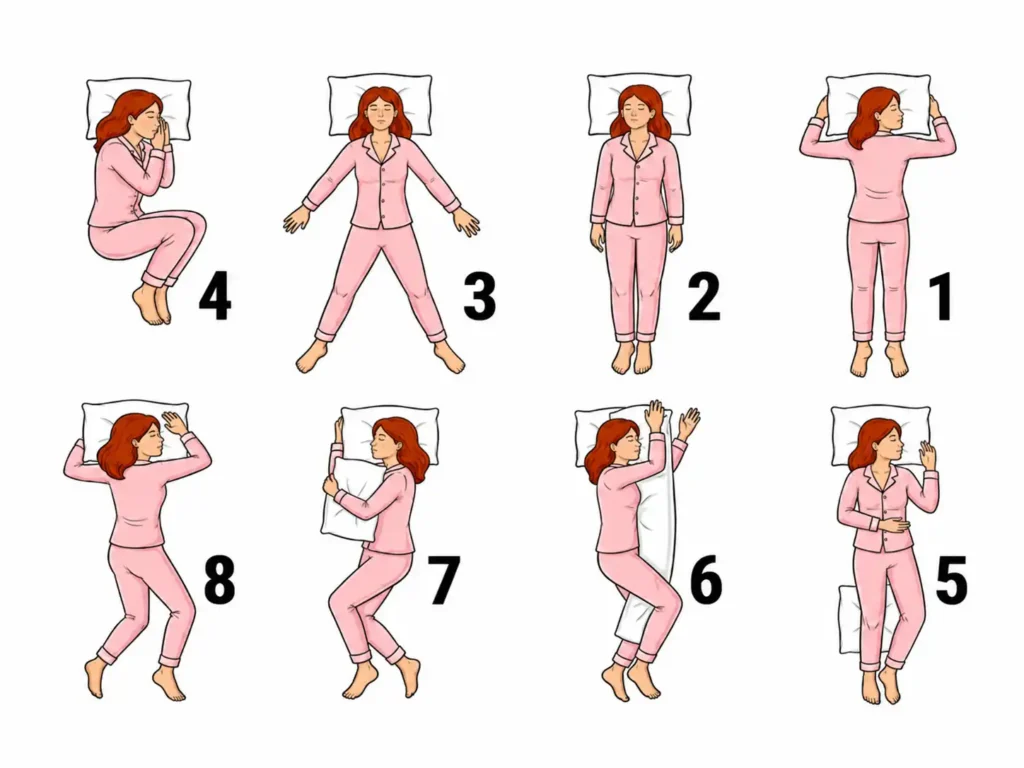
Certain sleeping positions have acquired personality descriptions over the years. These descriptions can be fun to read, but they should be treated as interesting observations rather than psychological tests.
The Curled-Up Side Position
In this familiar posture, a person sleeps on their side with the knees drawn toward the body. It is a common and comfortable way to sleep for many people.
Some popular personality theories associate this position with a desire for security or comfort. People may also notice themselves curling up more when they are particularly tired or stressed.
That doesn’t mean the position reveals a specific personality trait. In many cases, it is simply the posture that feels natural and relaxing.
The Straight Side Sleeper
Another common side-sleeping style involves keeping the body relatively straight, with the arms resting alongside the torso.
Internet personality descriptions sometimes portray people who sleep this way as relaxed, approachable, or comfortable with routine. These characterizations can be entertaining, but they shouldn’t be treated as established facts about the person sleeping in that position.
For many sleepers, the explanation is much simpler: the position feels comfortable.
The Pillow-Hugging Position
Some side sleepers naturally reach their arms forward or hold onto a pillow while sleeping. This can create a comfortable sense of support and may simply be part of someone’s bedtime routine.
Personality quizzes sometimes interpret this posture as a sign of emotional warmth, thoughtfulness, or a preference for connection. There is not enough evidence to use the position as a reliable way of determining those qualities.
Sleeping Flat on Your Back
Back sleeping involves lying face-up with the arms either beside the body or in another relaxed position.
Some people find this posture comfortable because it allows their body to remain relatively straight. Pillow height and individual anatomy can affect whether it feels supportive.
Online personality descriptions sometimes connect this position with organization or a preference for calm surroundings. In reality, someone may sleep this way simply because it is the position that feels best to them.
The Wide, Relaxed Back Position
Some back sleepers spread their arms away from their body and occupy more of the mattress. This position is sometimes given playful names and personality descriptions suggesting openness or generosity.
There is no good reason to assume that the amount of space someone takes up while asleep accurately reflects how generous, social, or supportive they are when awake.
The Stomach-Sleeping Position
Some people prefer sleeping on their stomach, sometimes with their arms near the pillow or around it.
Personality theories have occasionally linked stomach sleeping with energetic or outgoing behavior. But once again, the sleeping position itself cannot establish those characteristics.
There can also be practical considerations with stomach sleeping. Turning the head to one side for extended periods may be uncomfortable for some people, particularly if their pillow or mattress doesn’t provide suitable support.
Does Sleeping Position Tell You If Someone Is Lazy?
No. There is no sound basis for deciding that a person is lazy because of the way they sleep.
The idea may come from the simple visual impression of someone lying still and curled up in bed. But being inactive during sleep is exactly what sleeping people are supposed to be doing.
Sleep is an important biological process. During adequate sleep, the body and brain carry out many processes involved in recovery and normal functioning. A person’s motivation or work ethic cannot be judged from what their body looks like while they are asleep.
Motivation can be affected by many circumstances, including stress, overall sleep quality, physical health, emotional well-being, daily routines, workload, and a person’s environment.
What Your Sleeping Position May Actually Tell You
Although your sleeping position isn’t a personality test, paying attention to it can still be useful. Instead of asking, “What does this say about my character?” a better question is, “Why does my body find this position comfortable?”
It Can Reflect Physical Comfort
People naturally tend to settle into positions that feel comfortable. If a certain posture reduces pressure on an uncomfortable area, you may repeatedly return to it without even thinking about it.
A noticeable change in your normal sleeping position can also be worth paying attention to if it happens alongside new discomfort or other sleep changes.
Stress Can Change Sleep Habits
Your sleeping habits aren’t necessarily identical every night. Stressful periods can affect how restless you feel, how often you move, and how easily you settle into a comfortable position.
This doesn’t mean that one particular posture is a reliable measurement of stress. It simply shows why sleep behavior can change as circumstances change.
Your Sleep Environment Matters
The mattress, pillow, room temperature, noise level, and overall bedroom setup can all influence how comfortable you feel at night.
For example, someone may prefer one position on a very firm mattress and another position after changing to a softer sleeping surface. That change doesn’t represent a new personality. It may simply represent a different physical environment.
How to Make Your Sleeping Environment More Comfortable
Rather than trying to force yourself into a sleeping position because an online quiz says it matches your personality, focus on whether you are comfortable and getting restful sleep.
- Pay attention to how you feel when you wake up instead of judging yourself by your sleeping posture.
- Use a pillow that provides comfortable support for your head and neck.
- Choose a mattress that feels appropriate for your body and preferred sleeping style.
- Keep the bedroom as comfortable, quiet, and dark as practical.
- Notice recurring patterns in your sleep and morning energy over several nights rather than drawing conclusions from one night.
- If persistent pain, loud snoring, repeated awakenings, or significant daytime tiredness is affecting your life, consider speaking with a healthcare professional.
Why Viral Sleep Personality Tests Can Be Misleading
Simple personality labels are appealing because they turn complicated behavior into an easy story. You see a sleeping position, read a description, and suddenly feel as though you’ve learned something important about yourself.
The problem is that people don’t fit neatly into categories. A person can be outgoing in one situation and quiet in another. Someone can be highly motivated at work and completely relaxed at home. Human behavior changes according to circumstances.
The same principle applies to sleep. A person might sleep on their side one night and their back the next. They might change positions because of temperature, physical comfort, stress, their pillow, or countless other ordinary factors.
A fun personality quiz can be harmless entertainment, but it shouldn’t be mistaken for a scientific assessment.
Your Sleep Position Doesn’t Define You
There is something interesting about noticing your natural sleeping posture. It can help you become more aware of your comfort and perhaps encourage you to think about whether your pillow, mattress, or bedroom setup is working well for you.
What it cannot do is provide a reliable judgment of your character.
Whether you curl up tightly, stretch out across the mattress, sleep on your back, or prefer your stomach, none of these positions determines how ambitious, intelligent, generous, hardworking, or successful you are.
A Better Way to Think About Your Sleeping Habits
Instead of looking for a personality label, use your sleeping position as a small piece of information about your comfort. Ask yourself whether you wake up feeling rested, whether you experience recurring discomfort, and whether your bedroom setup allows you to sleep comfortably.
That approach is much more useful than worrying about whether your sleeping posture fits an internet stereotype.
Your sleeping position is only one small part of your nighttime routine, and your nighttime routine is only one small part of who you are. A person’s personality cannot be reduced to the way they happen to lie in bed.
Final Thoughts
The next time you see a post claiming that your sleeping position reveals your entire personality, take it with a healthy dose of skepticism. These claims can be fun conversation starters, but they shouldn’t be treated as scientific conclusions.
Your preferred position is much more likely to tell you something about what feels comfortable to your body than whether you’re lazy, ambitious, shy, confident, or outgoing.
So sleep in the position that allows you to rest comfortably, pay attention to meaningful changes in your sleep, and focus on healthy habits rather than personality labels. Good sleep is valuable because it supports your well-being—not because it says anything about your reputation or character.
Disclaimer: This article is for general educational purposes and is not a substitute for individualized medical or psychological advice. If persistent sleep difficulties, ongoing pain, significant daytime fatigue, or other concerning symptoms are affecting your daily life, consult a qualified healthcare professional for appropriate guidance.