
It is an easy shortcut to consider on a busy morning: take a package of frozen chicken or beef from the freezer, place it in the slow cooker, turn the appliance on, and leave dinner to cook throughout the day. The meat may eventually look fully cooked, but that does not make the method reliably safe.
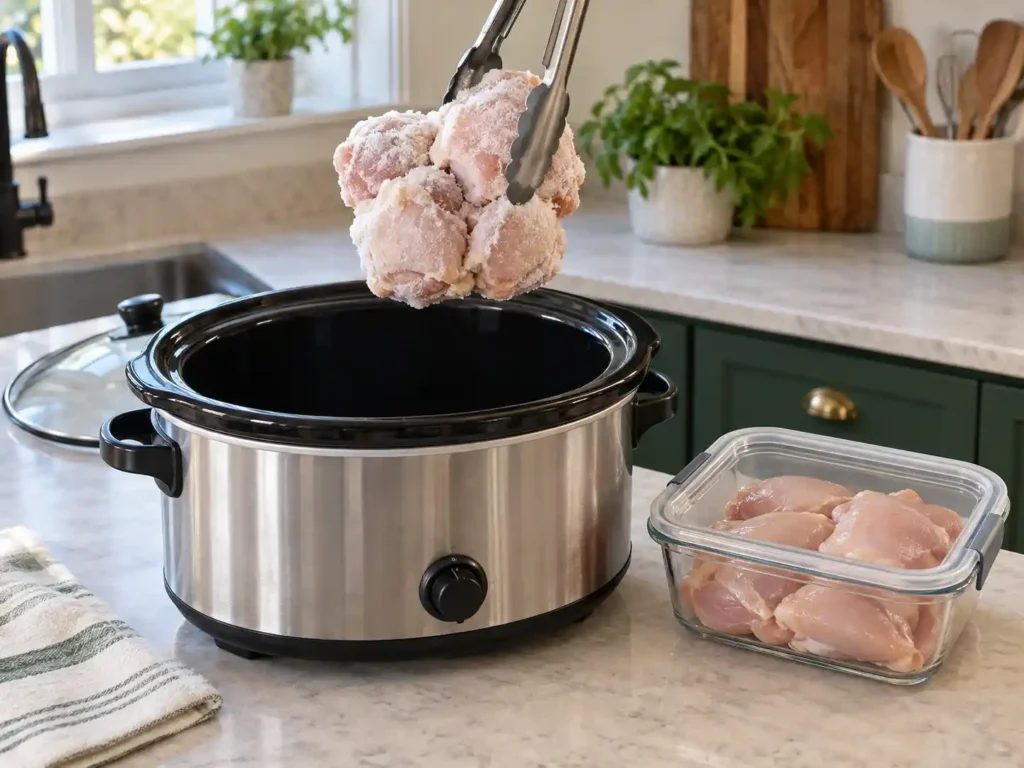
For a traditional slow cooker, meat and poultry should be thawed before cooking. A slow cooker heats food gradually, and a solid frozen piece can take too long to warm through. During that time, portions of the meat may remain at temperatures where harmful bacteria can multiply.
The safest approach is simple: thaw the meat using an approved method, place it in the slow cooker while it is still properly refrigerated, and confirm doneness with a food thermometer before serving.
Why Frozen Meat Creates a Food-Safety Concern
Slow cookers are designed to prepare food over several hours at relatively gentle heat. That gradual process works well when the ingredients begin thawed. Frozen meat, however, adds a dense, icy center that slows the rate at which the entire dish heats.
Food-safety guidance commonly identifies temperatures between 40°F and 140°F as the “danger zone.” Bacteria can grow rapidly within this range. When a large frozen piece of meat is placed in a slow cooker, its exterior begins warming while the center remains frozen or extremely cold. The food may therefore spend too much time passing through temperatures favorable to bacterial growth.
The concern is not limited to whether the meat eventually reaches a safe temperature. Cooking can kill many bacteria, but certain toxins produced under favorable conditions may not be eliminated as easily. Safe preparation is about controlling both the final temperature and the time food spends warming.
Why Common Workarounds Are Not Reliable
Adding extra broth or water does not turn frozen meat into a safe slow-cooker ingredient. Liquid can transfer heat, but the appliance still warms gradually, and the frozen center may continue delaying the heating process. The added liquid also begins cold if it comes into contact with a large frozen block.
Starting the slow cooker on its high setting is not a dependable solution either. High heats faster than low, but a traditional slow cooker is still not intended to thaw a solid block of meat safely before beginning the long cooking process.
Cutting frozen meat into pieces is also difficult and potentially hazardous. A knife can slip against the hard surface, and partially thawing meat on the counter introduces another food-safety problem. Thaw it correctly before cutting or placing it in the cooker.
The appliance manufacturer’s directions should always be followed. If a specific product includes a tested frozen-food program, use it exactly as directed. Instructions for a pressure cooker, multicooker, or another appliance should not be assumed to apply to a conventional slow cooker.
Three Safe Ways to Thaw Meat
There are three established methods for thawing meat safely: in the refrigerator, in cold water, or in the microwave. Each method has a different timeline, so the best choice depends on how soon the meal needs to be cooked.
1. Thawing in the Refrigerator
Refrigerator thawing is the easiest method when there is enough time to plan ahead. Keep the meat wrapped and place it on a plate, tray, or in a container that can catch any liquid. Store it on a lower refrigerator shelf so drips cannot fall onto other foods.
Small packages may thaw within a day, while larger or thicker cuts can require considerably longer. Refrigerator temperature, package shape, and the amount of meat all affect the timing. Allow extra time instead of assuming every package will thaw at the same rate.
Once thawed in the refrigerator, raw poultry and ground meat are generally best cooked within one or two days. Whole cuts of beef may remain refrigerated for approximately three to five days before cooking. If plans change, meat thawed entirely in the refrigerator can generally be refrozen, although some quality may be lost.
2. Thawing in Cold Water
The cold-water method is useful when refrigerator thawing would take too long. Place the meat in a leak-proof bag, submerge it in cold tap water, and change the water every 30 minutes so it remains cold.
Small packages may thaw in about an hour or less, while larger portions can take several hours. A rough estimate is around 30 minutes per pound, but thickness and shape can change the actual time. Meat thawed this way should be cooked immediately rather than returned uncooked to the refrigerator for another day.
Do not use warm or hot water. It can bring the outer surface into unsafe temperatures while the center remains frozen. The bag should also remain sealed so the meat is protected from water and possible contamination.
3. Thawing in the Microwave
Microwave thawing is the fastest option. Follow the appliance instructions, use the appropriate defrost setting, and pause as needed to turn or separate the meat for more even thawing.
Because a microwave may warm or begin cooking certain areas while other parts remain cold, the meat must be cooked immediately after defrosting. A faster cooking method, such as the stovetop or oven, is a practical choice after microwave thawing. Do not partially microwave the meat and then leave it waiting for later preparation.
What to Do If You Forgot to Thaw Dinner
Forgetting to move meat from the freezer does not mean dinner is ruined. It simply means the cooking plan needs to change. If several hours remain before mealtime, use the cold-water thawing method. If dinner needs to begin immediately, use the microwave and follow with a suitable faster cooking method.
Some pressure cookers can cook certain frozen foods, but directions vary by appliance, recipe, food type, and package size. Follow a tested recipe and the manufacturer’s instructions rather than transferring slow-cooker timing to a pressure cooker.
Another reasonable option is to prepare a different meal with ingredients that are ready to cook. Eggs, pasta, canned beans, lentils, vegetables, or a simple soup can provide an uncomplicated dinner without taking an avoidable safety risk.
If frozen meat has already been placed in a slow cooker and has been warming for an uncertain length of time, appearance and smell cannot confirm that it is safe. When its time and temperature history are unclear, the cautious choice is to discard it rather than trying to rescue it by extending the cooking time.
Use a Food Thermometer, Not Appearance Alone
Color, texture, and clear juices are not dependable measurements of safety. Check the thickest part of the meat with a clean food thermometer, avoiding bone where possible.
- Poultry: Cook chicken, turkey, and other poultry to at least 165°F.
- Ground meat: Cook ground beef and ground lamb to at least 160°F.
- Whole cuts: Cook beef and lamb steaks, chops, and roasts to at least 145°F, followed by a three-minute rest.
- Leftovers and casseroles: Reheat to at least 165°F.
If a slow-cooker recipe contains several pieces of meat, check more than one piece when practical. The largest or thickest portion may take longer to reach the required temperature.
Simple Planning Makes Slow Cooking Easier
A brief evening routine can prevent the frozen-meat problem. Review the next day’s meal, move the required package into the refrigerator, and place it in a container on the bottom shelf. In the morning, the ingredients can go directly from the refrigerator into the slow cooker.
Prepare vegetables separately and keep them refrigerated until cooking begins. Do not assemble raw meat and other ingredients in the slow-cooker insert and leave it at room temperature. Perishable food should remain cold until the appliance is turned on.
Avoid overfilling the cooker, follow the recipe and appliance directions, and keep the lid in place as much as possible. Each unnecessary opening releases heat and can lengthen the cooking time.
The Bottom Line
Frozen meat should not be placed directly into a traditional slow cooker. The appliance may take too long to move the food through temperatures where bacteria can multiply, even if the meat eventually appears fully cooked.
Thaw meat in the refrigerator, in cold water, or in the microwave. Cook immediately after cold-water or microwave thawing, follow the appliance instructions, and verify the final internal temperature with a food thermometer.
Changing dinner plans after forgetting to thaw meat can be inconvenient, but it is a better choice than relying on a risky shortcut. A little planning—and a reliable thermometer—makes slow-cooker meals safer and easier to serve with confidence.
Note: This article provides general food-safety information. Follow current guidance from the USDA Food Safety and Inspection Service and the instructions supplied with your cooking appliance.