
Hotel rooms are filled with small details that can make traveling feel more comfortable. A neatly folded pair of slippers, miniature toiletries beside the sink, a notepad on the desk, coffee supplies near the machine, and a soft robe in the closet can all feel like thoughtful extras.
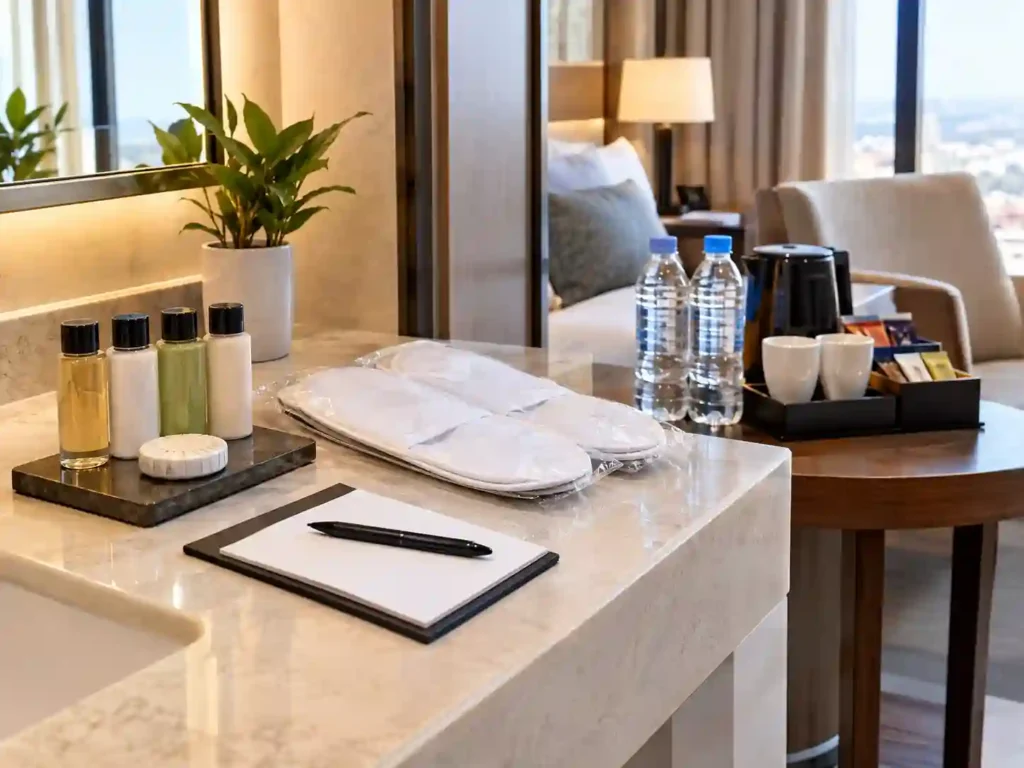
But there is one question that often comes up when checkout time arrives: Can I take this home?
The answer depends on what the item is and how the hotel provides it. Some things are disposable or intended as guest amenities, while others are reusable property that needs to remain in the room for the next traveler. The distinction is not always obvious, especially when hotels offer different policies and room packages.
A simple way to think about it is this: if something is clearly complimentary, disposable, consumable, or presented as a guest gift, it may be reasonable to take it. If it is reusable equipment, furniture, room inventory, or something valuable, it should normally stay in the room unless the hotel gives you permission.
Why Hotels Put So Many Items in Guest Rooms
A hotel room is designed to give guests many of the things they might need during a short stay. Some supplies are there to be consumed, some are provided for personal use, and others are equipment that gets cleaned and reused between guests.
That difference matters. A small bottle of lotion and a hair dryer may both be sitting beside other guest amenities, but they serve very different purposes. The lotion is a consumable product, while the hair dryer is reusable hotel equipment.
When there is any doubt, the easiest solution is to ask the front desk. Hotel policies can differ, and asking before taking something can prevent an unexpected charge or an awkward follow-up after checkout.
Hotel Items You Can Usually Take
Individually Packaged Toiletries
Small bottles or packets of shampoo, conditioner, body wash, lotion, and similar personal-care products are commonly provided as guest amenities. If they are individually packaged and supplied for your stay, they are generally treated differently from permanent bathroom equipment.
The type of dispenser matters, though. A small bottle placed beside the sink is one thing. A large refillable dispenser mounted to the shower wall is another. The mounted dispenser is part of the room and should remain where it is.
Disposable Hotel Slippers
Lightweight slippers supplied for individual guest use are commonly intended as amenities rather than permanent room inventory. If the slippers are clearly disposable or provided specifically for guests, taking them with you after your stay is generally much less questionable than removing reusable hotel supplies.
Individually Packaged Soap
An unused, individually wrapped bar of soap provided for your stay is another common example of a guest amenity. It is different from a refillable dispenser, soap holder, or other bathroom fixture that remains part of the room.
Notepads, Pens, and Pencils
Branded notepads and pens are often placed in hotel rooms for guests to use. They can also serve as promotional items because the hotel’s name remains with the guest after the trip.
A simple branded pen on the desk is therefore very different from a folder containing hotel records, room information, or property documents. If a stationery item looks like a promotional guest amenity, it may be intended to leave with you; hotel-specific policies can still vary.
Complimentary Water
Bottled water requires a little more caution. Some hotels provide water free of charge, while others place bottles in rooms as paid minibar products.
Before taking a bottle, check the room information, minibar menu, welcome materials, or hotel app. If it is clearly identified as complimentary, it is different from a bottle with a listed price or one included in the minibar inventory.
Items You Should Usually Leave Behind
Towels and Bath Linens
That exceptionally soft hotel towel may be tempting, especially after a long trip, but towels are reusable hotel inventory. Bath towels, hand towels, washcloths, bath mats, and pool towels are all expected to remain available for future guests.
The same principle applies to sheets, duvets, blankets, comforters, mattress toppers, and other bedding. They may be comfortable, but their presence in the room means they are available for your use rather than automatically becoming your property.
Robes
Hotel robes are another classic source of confusion. Unless the hotel specifically identifies a robe as a gift or tells guests that it may be taken, it should remain in the room.
If you love the robe, there is a much easier option: ask the front desk whether the hotel sells it. Some properties offer guests the opportunity to purchase robes, bedding, pillows, or other branded products.
Hair Dryers and Irons
A hair dryer is placed in the room for convenience, but that does not make it a complimentary appliance. The same applies to irons, ironing boards, electric kettles, and other reusable equipment.
Use these items during your stay and return them to their usual locations before checking out. They need to be ready for the next guest.
Hangers
Closet hangers may look like an easy souvenir, but they are still part of the hotel’s room inventory. Unless the property specifically says otherwise, leave them in the closet.
Coffee Makers, Kettles, and Similar Equipment
Coffee makers, electric kettles, and similar appliances are provided for use during your stay. They are reusable equipment, not complimentary gifts.
The same logic applies to ironing equipment and other items that the hotel expects to use repeatedly. If the item has a clear function in preparing the room for future guests, it should normally stay behind.
Remote Controls and Electronics
Television remotes, air-conditioning remotes, charging stations, speakers, tablets, alarm clocks, and other electronics are hotel equipment. They should not be packed into your luggage simply because they were sitting in the room.
What About Coffee, Tea, and Other Supplies?
Individual packets of coffee, tea, sugar, creamer, hot chocolate, and stir sticks are often supplied for guest consumption. When they are clearly complimentary supplies beside the coffee maker, unused packets are generally treated differently from paid minibar products.
The important thing is to identify what is included. A snack or drink in a minibar may look just as ordinary as a complimentary coffee packet, but it could have a price attached to it. Check the minibar menu or room information before putting anything into your suitcase.
Be Careful With Minibar Snacks and Drinks
Chocolate, chips, nuts, candy, soft drinks, bottled water, and other minibar products can create unexpected charges if you assume they are free. Some hotel minibars also use tracking systems that record when products are removed or moved.
The safest approach is simple: if a product has a listed price, treat it as something you are expected to pay for. If the hotel has clearly identified it as complimentary, that is a different situation.
What About Books, Magazines, and Newspapers?
Reading materials can fall into a gray area because hotels handle them in different ways. A newspaper delivered to your room may be intended for guests to read and keep, while a magazine belonging to the hotel, concierge service, or another organization may be intended to remain there.
The same applies to books placed in nightstands. Do not assume that a book becomes yours simply because it is available in the room. If there is no clear indication that guests may take it, asking the front desk is the simplest solution.
The Gray Area of Hotel Stationery
A small branded notepad and pen are commonly used as guest amenities, but not every piece of paper in a hotel room is intended to be taken. A folder containing hotel policies, local information, room-service details, maps, or other materials may be part of the hotel’s room setup.
When the purpose of an item is unclear, consider whether it looks like a promotional giveaway or a reusable hotel resource. If you cannot tell, ask before packing it.
The Most Important Rule: Being in Your Room Does Not Mean It Is Yours
This is the easiest principle to remember. A hotel temporarily gives you access to a furnished room and the things inside it. That does not transfer ownership of everything you see.
Furniture, electronics, linens, towels, appliances, lamps, artwork, hair dryers, remotes, and other reusable items are there so you can use them during your stay. They are not automatically souvenirs.
A good mental test is to imagine whether the item needs to be replaced or returned before another guest can use the room. If the answer is yes, it is probably hotel property rather than a complimentary amenity.
Items That Should Be Obvious No-Gos
Artwork and Decorations
Paintings, framed pictures, decorative vases, sculptures, clocks, and other room decorations should remain where they are. The fact that something is not physically attached to the wall does not make it a guest amenity.
Furniture
A comfortable chair, bench, stool, side table, or other piece of furniture is part of the room. Even if you happen to love it, it should stay behind unless the hotel explicitly offers it for sale.
Fixtures and Attached Equipment
Anything attached to the room deserves extra caution. This includes light fixtures, mirrors, showerheads, curtain rods, mounted dispensers, shelving, wall-mounted hair dryers, and bathroom fixtures.
If taking something would require tools or removing part of the room, that is an especially strong sign that it should remain exactly where it is.
What Can Happen If You Take Hotel Property?
The consequences depend on the item, its value, the hotel’s policies, and the circumstances. A hotel may charge a guest for missing property, contact the guest to arrange its return, or seek reimbursement for replacement costs.
For expensive or valuable property, the situation can become considerably more serious. Even seemingly small items can create extra work for housekeeping and hotel staff because the room has to be prepared properly for the next guest.
That is why relying on the idea that nobody will notice is not a good approach. Hotels have to maintain their room inventory, and missing equipment can require staff time and replacement purchases.
Why Hotels May Charge for Missing Items
Hotel rooms are prepared repeatedly for different guests. When a towel, remote, hair dryer, appliance, or other reusable item disappears, the hotel may need to purchase a replacement and have staff install or restock it.
Those individual replacement costs can add up across many rooms. A charge for missing property is therefore often connected to the practical cost of restoring the room to its expected condition.
If You Really Want Something, Ask
There is an easy solution when you fall in love with something in a hotel room: ask whether you can buy it.
A particularly comfortable robe, pillow, mattress, blanket, or other hotel product may be available for purchase. Some properties sell branded merchandise or work with suppliers that allow guests to order the same products used in their rooms.
This approach gives you a legitimate way to recreate part of the hotel experience at home without accidentally leaving the property with something that belongs to the hotel.
A Simple Hotel Room Checklist Before Checkout
A quick look around the room can help you avoid confusion before you leave.
Usually reasonable to take when clearly complimentary:
- Individually packaged toiletries
- Disposable guest slippers
- Branded promotional pens
- Guest notepads
- Individual coffee and tea supplies provided for guests
- Snacks or drinks clearly identified as complimentary
Usually leave behind:
- Towels and bath linens
- Robes
- Pillows and blankets
- Sheets and other bedding
- Hair dryers
- Irons and ironing boards
- Hangers
- Coffee makers and kettles
- Remote controls
- Lamps and electronics
- Artwork and decorations
- Furniture
- Bathroom fixtures and mounted equipment
Check with the hotel first:
- Minibar food and drinks
- Bottled water
- Magazines and newspapers
- Books placed in guest rooms
- Premium toiletries
- Robes
- Special welcome gifts
- Branded merchandise
- Anything expensive, reusable, or difficult to classify
Frequently Asked Questions
Can I take hotel shampoo home?
Usually, individually packaged complimentary toiletries are intended for guest use and may be taken after your stay. Policies can differ, particularly when the bathroom uses refillable dispensers.
Can I take the hotel slippers?
If they are disposable guest slippers supplied specifically for your stay, they are commonly treated as a guest amenity.
Can I take the hotel robe?
Usually not unless the hotel specifically identifies the robe as complimentary or offers it for purchase.
Can I take towels from a hotel?
Generally no. Towels are reusable hotel property and should remain in the room.
Can I take the hotel pen?
A branded promotional pen is commonly intended for guests, although individual hotel policies can differ.
Can I take bottled water?
Only when you know it is complimentary. A bottle listed as a minibar product or carrying a price may be charged to your room.
Can I take the coffee and tea?
Complimentary individual coffee and tea supplies are commonly provided for guest consumption. Paid minibar products are a separate matter.
Can I take a book from a hotel room?
Do not assume that a book is yours simply because it is available in the room. If you want to keep it, ask the hotel whether guests are allowed to take it.
Can I take a pillow from a hotel?
Generally no, unless the hotel specifically gives you permission or offers the pillow for sale.
What should I do if I accidentally take something?
Contact the hotel as soon as you realize what happened. The hotel can tell you whether it wants the item returned or whether a replacement charge applies.
The Easiest Rule to Remember
If you are standing in a hotel room holding something and wondering, “Am I actually allowed to take this?”, that is usually the perfect moment to ask.
Disposable, complimentary, promotional, or clearly identified guest gifts are more likely to be yours to keep. Reusable, expensive, attached, or furnished items should normally stay behind.
When there is uncertainty, a quick question at the front desk can save you from an unexpected charge later. Hotel policies are not always identical, so the property’s own guidance is the final word for a particular item.
Final Thoughts
Hotel rooms are designed around comfort, and the little extras can make an overnight stay feel much more pleasant. A tiny bottle of lotion, a pair of slippers, a notepad, or a cup of coffee can be a welcome part of the experience.
The key is knowing the difference between a guest amenity and hotel property. Something being placed in your room does not automatically mean it belongs to you.
Use the room’s reusable items, enjoy the complimentary supplies that are clearly provided for guests, and leave the towels, bedding, electronics, appliances, furniture, and fixtures where they belong. If there is something you genuinely want to take home, ask whether the hotel sells it or allows guests to keep it.
That simple habit makes checkout easier and gives you a much better chance of leaving with a pleasant souvenir rather than an unexpected charge on your bill.