
Nail clippers are so familiar that most people never pause to examine their design. Pick up a typical pair, however, and you may notice a small circular hole near the end of the lever or metal body. It can look decorative or unnecessary, but it usually has a practical purpose.
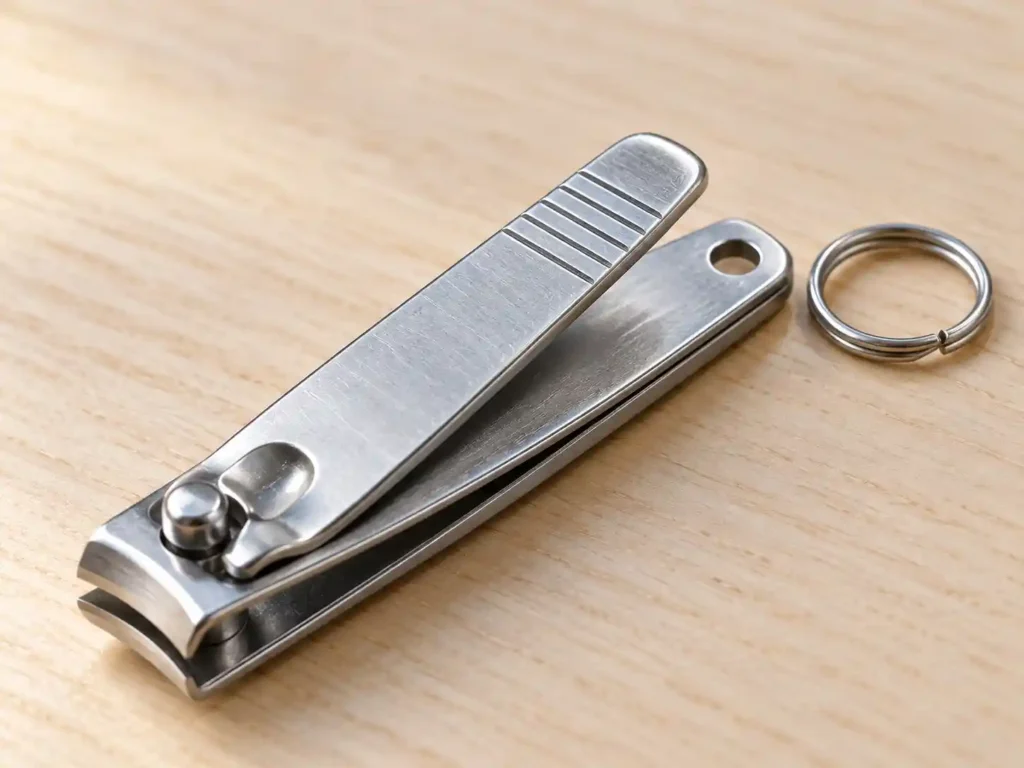
On many nail clippers, this opening provides a convenient attachment point for a key ring, small chain, or lanyard. It allows the compact tool to be carried, stored, or secured without taking up additional space. The precise design can vary by manufacturer, so not every hole has exactly the same shape or placement, but portability is its most useful everyday function.
A Simple Attachment Point
A nail clipper is easy to misplace because it is small and often stored loose in a bathroom drawer, travel bag, or grooming kit. Passing a split key ring or sturdy loop through the opening gives the clipper a fixed place and makes it easier to find when needed.
Attaching it to a toiletry pouch can be especially useful while traveling. Instead of searching through a bag for a loose metal tool, you can keep it secured to an interior loop or zipper pull. A small lanyard also makes the clipper easier to retrieve from a crowded drawer without permanently attaching it to a set of keys.
Some inexpensive clippers arrive with a lightweight chain already fitted through the hole. Those chains can loosen or break over time, but the opening in the metal remains available for a stronger attachment. A small split ring is generally more dependable than a delicate decorative chain.
Why Carrying a Nail Clipper Can Be Practical
A chipped or jagged nail can catch on clothing and become increasingly uncomfortable. Having a clipper in a personal grooming kit, desk drawer, or travel bag makes it possible to smooth the damaged edge before it tears farther.
The attachment hole helps keep the tool available without requiring a special storage case. It can be connected to a compact hygiene pouch, first-aid organizer, or another personal item that stays clean and protected.
Carrying a clipper openly on the same key ring used throughout the day is less ideal from a hygiene standpoint. Keys are handled frequently and placed on many surfaces. If the clipper travels on a key ring, it is sensible to clean it before use and keep the cutting edges covered when possible.
Can the Hole Be Used for Bending Wire?
Some household tips suggest feeding thin craft wire through the hole and using the clipper as leverage for a small bend. The opening may physically allow this with certain lightweight materials, but that does not mean every nail clipper was designed for the job.
Trying to bend wire can scratch the clipper, distort its lever, or create a sharp edge around the opening. Wire may also slip unexpectedly and injure a hand. If a project requires shaping metal, small pliers are the better tool because their jaws and handles are built to hold and bend material safely.
For very soft craft material, the hole might provide temporary leverage in an emergency, but it should not be treated as a replacement for proper equipment. Thick, springy, or electrical wire should never be forced through it, and a nail clipper should not be used on live electrical components.
Other Features Built Into a Nail Clipper
The small opening is only one part of a compact mechanical design. A standard clipper uses two sharpened metal jaws joined at one end. A movable lever presses against a pivot point, multiplying the force from the thumb so the cutting edges can close through a nail with relatively little effort.
Many models also include a folding nail file. Its textured surface is intended to smooth rough nail edges after clipping. Some files have a narrow or pointed tip, but that point should be used carefully and kept away from sensitive skin beneath the nail.
The file may resemble a tiny screwdriver, and it might fit certain small screw heads. Even so, it is not shaped or hardened for dependable screw work. Using it that way can strip the screw, bend the file, or cause the tool to slip. A precision screwdriver is safer for eyeglasses, electronics, toys, and battery compartments.
The pointed file is also sometimes promoted as a package opener. It may pierce tape, but that use can contaminate the grooming tool and place fingers close to a sharp metal point. Scissors or a dedicated package opener provide better control and are less likely to damage the contents of a box.
How to Attach a Ring Without Damaging the Clipper
Choose a small split ring that fits through the opening without forcing the metal apart. Gently separate the end of the ring and rotate it through the hole, just as you would attach a key. Avoid prying the ring open widely with the cutting edge of the clipper, since that can dull or misalign the blades.
After attaching the ring, open and close the clipper several times. Make sure the ring does not interfere with the lever, file, pivot, or cutting jaws. If the tool no longer operates freely, use a smaller ring or remove it.
A short cord loop is another option, provided the material can be washed or replaced. Long cords can become tangled inside a bag, so the attachment should remain compact and should not pull against the lever during use.
Keeping a Nail Clipper Clean
Portability is helpful only when the clipper is maintained properly. Nail fragments can remain between the blades or around the pivot after use. Remove visible debris, clean the surfaces, and allow the tool to dry completely before returning it to a closed pouch.
Do not share personal nail tools without appropriate cleaning. A clipper can come into contact with skin, damaged cuticles, or small amounts of blood that may not be immediately visible. Keeping separate tools for individual household members is a simple way to reduce cross-contamination.
Moisture can also encourage rust, particularly around hinges and narrow gaps. Store the clipper in a dry location rather than leaving it beside a wet sink or sealing it in a damp travel bag. Replace it if the cutting surfaces become rusty, damaged, loose, or difficult to align.
Small Design, Useful Purpose
The tiny hole on a nail clipper is a good example of practical design that does not draw attention to itself. Its main value is straightforward: it provides a place to attach the tool to a ring, loop, chain, or lanyard so it is easier to carry and less likely to disappear.
Although the opening and folding file may be capable of assisting with occasional small tasks, forcing the clipper to act as pliers, a screwdriver, or a package knife can damage it or create unnecessary risk. Purpose-made tools remain the better choice for those jobs.
Understanding the feature does not transform the nail clipper into a miniature toolbox. It simply reveals how a small manufacturing detail can make an ordinary object easier to store, carry, and use—without making the design more complicated than it needs to be.