
At first glance, an old turnover toaster can look surprisingly unfamiliar. Compared with the sleek pop-up toaster found in many kitchens today, its design seems almost mysterious. There are no familiar slots designed to disappear beneath the surface, no simple browning dial, and no automatic pop-up mechanism announcing that the toast is ready.
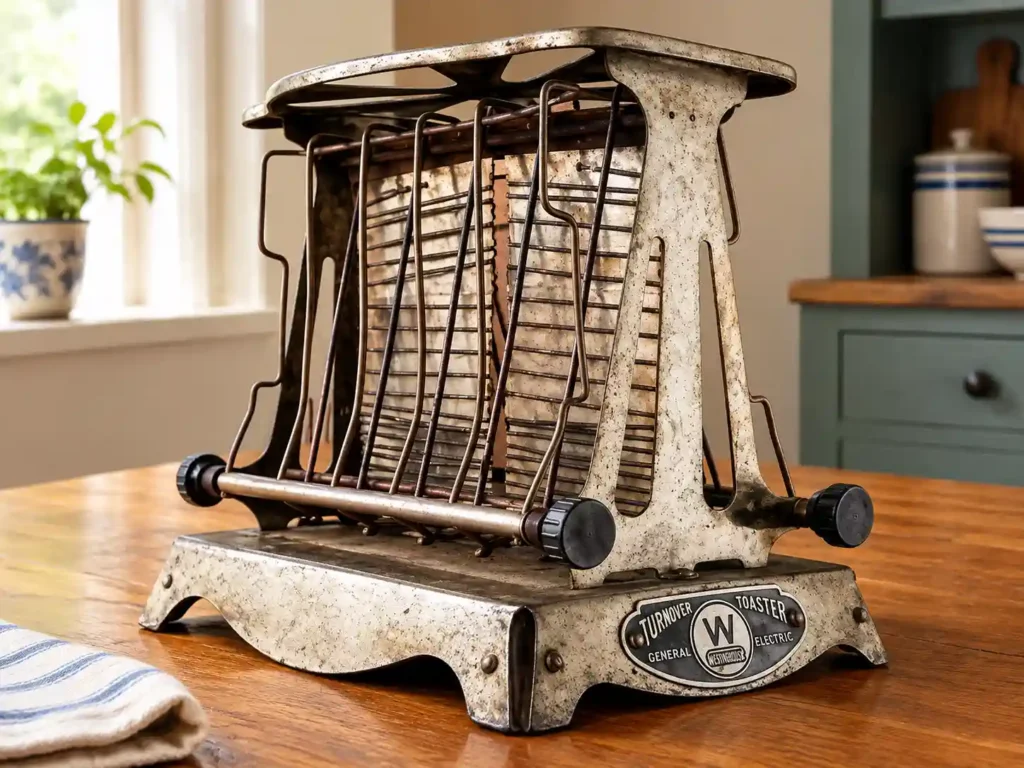
Yet early electric toasters like these played an interesting part in the history of the modern kitchen. Instead of placing bread inside an appliance and walking away, the person making breakfast had to stay involved. The bread was placed near the heating elements, watched as it browned, and manually turned so the other side could be toasted.
Today, that process may seem surprisingly hands-on. But it offers a fascinating glimpse into a time when household electricity was changing familiar routines and kitchen appliances were still developing the convenient features we now take for granted.
What Was a Turnover Toaster?
A turnover toaster was an early type of electric toaster designed to toast bread one side at a time. Rather than automatically handling both sides, the appliance relied on the user to monitor the bread and turn it manually.
The heating elements were exposed or clearly visible, making it possible to watch the bread as it gradually changed color. Once one side had reached the desired level of browning, the user would turn the bread so the opposite side could receive heat.
There was no modern browning control telling you exactly how long the toast should cook. The person preparing breakfast had to rely on observation and timing.
That simple difference makes the turnover toaster particularly interesting. The appliance performed the heating, but the person still played an important role in controlling the process.
How Did the Old Toaster Work?
The basic principle was straightforward. A slice of bread was positioned so that one surface faced the heating elements. As the appliance operated, heat browned that side of the bread.
The user then watched the toast and decided when it had reached the desired color. Instead of the machine automatically flipping the slice, the person turned the bread by hand and exposed the other side to the heat.
That meant the results depended partly on the person’s attention. Leave the bread too briefly and it might remain pale. Leave it near the heating elements too long and it could become overly dark.
The process was simple, but it required active participation. The toaster wasn’t simply a machine that completed breakfast by itself. The user and appliance worked together to produce the final slice.
Why Did People Have to Turn the Bread?
The manual design reflected the technology available in early electric toaster construction. Heating elements could provide the necessary heat, but later automatic mechanisms that made modern toasters so convenient were not part of every early design.
As a result, the user became part of the process. Instead of choosing a setting and waiting for a finished slice to pop up, the person had to watch the bread and decide when it was time to turn it.
That small task may seem insignificant, but it changed the experience of making breakfast. The toaster required attention from start to finish.
It also made the cooking process easy to see. The glowing heating elements and gradually browning bread gave the user a direct view of what was happening rather than hiding the entire process inside an enclosed appliance.
Breakfast Was a More Hands-On Experience
Think about how little attention modern toast usually requires. A slice goes into the toaster, a browning level is selected, and the lever is pressed. After that, the appliance handles most of the work.
A turnover toaster created a very different routine. Someone had to remain aware of the bread while it was heating. The changing color became the signal that it might be time to turn the slice.
That doesn’t necessarily mean the older method was considered remarkable by the people who used it. It was simply part of using the appliance available to them. But from a modern perspective, the difference is striking.
Today, convenience often means removing as many small decisions as possible. The older toaster shows the opposite approach: the appliance supplied the heat, while the user supplied the timing and judgment.
A Small Appliance With a Bigger Story
A turnover toaster was more than a device for browning bread. It was also part of the broader transition toward electrically powered household appliances.
As electricity became increasingly integrated into domestic life, familiar household tasks could be approached in new ways. Appliances introduced electrical power into activities that had previously relied on other methods, and the kitchen became one of the places where those changes were especially visible.
A toaster may seem like a small example compared with larger household machines, but small appliances can reveal a great deal about technological change. They show how new technology entered ordinary routines one task at a time.
Instead of simply asking whether an appliance worked, it is interesting to consider what using it felt like. With a turnover toaster, the answer involved watching, waiting, judging, and turning.
What Made the Turnover Toaster So Interesting?
One of the most noticeable features of this type of appliance is how visible the process could be. The heating elements provided a clear visual indication that the toaster was working, while the bread slowly developed a darker color.
There was something very direct about that arrangement. You could see the heat source. You could see the bread changing. And you could make a decision based on what was happening in front of you.
Modern appliances often hide the mechanical process behind panels, sensors, controls, and automatic systems. That’s useful and convenient, but it also means the user may have little sense of what is happening inside.
The older toaster was different. Its operation was comparatively easy to understand because the important parts of the process were visible.
How Did the Pop-Up Toaster Change Things?
The development of more automatic toaster designs gradually changed the breakfast routine. The familiar pop-up toaster made it possible to insert bread, select a setting, start the appliance, and wait for the toast to rise when the cycle was complete.
The basic goal remained exactly the same: turn bread into warm, browned toast. What changed was the amount of attention required from the person preparing it.
Automatic controls reduced the need to watch the bread continuously and removed the need to turn each slice by hand. The appliance increasingly took responsibility for the timing and sequence of the task.
This reflects a familiar pattern in household technology. As designs develop, appliances often become easier to operate by taking over more of the small decisions that users once had to make themselves.
Why Vintage Toasters Fascinate Us Today
Old kitchen appliances can be fascinating because they make ordinary activities from the past easier to imagine. A vintage toaster isn’t just an object with an unfamiliar shape. It represents a different way of completing a task that still exists today.
Modern technology has made breakfast faster and more convenient, but that convenience can also make the process almost invisible. We place bread into a toaster, press a control, and think about something else while the appliance does its work.
A turnover toaster encourages a different mental picture. You can imagine the bread sitting near glowing heating elements, gradually becoming browned while someone watches it closely. When the first side is ready, the slice is turned and the process continues.
The object therefore gives us a small but tangible connection to an earlier form of everyday technology.
A Glimpse Into Everyday Household Life
The most interesting part of a vintage turnover toaster may not be its construction at all. It may be what the appliance tells us about ordinary routines.
A person preparing breakfast had to interact directly with the machine. The bread needed attention, and the timing depended on observation. The process was small, but it was part of the rhythm of everyday life.
This is one reason old household objects can be useful historical artifacts. They don’t only show what technology looked like. They can also reveal how technological changes affected ordinary tasks.
Looking at an old toaster can therefore raise a surprisingly interesting question: how many everyday activities have become different because machines gradually took over small parts of the work?
The answer can be seen in countless objects around the home, from kitchen appliances to cleaning equipment and other devices designed to make routine tasks easier.
The Decline of the Turnover Toaster
As toaster designs became more convenient and automatic, the need for manual turnover gradually became less important. Later designs offered users an easier way to brown bread without standing beside the appliance and turning each slice.
The fundamental purpose, however, never changed. People still wanted warm, crisp toast for breakfast or another meal. The major difference was how much effort and attention the appliance required from the user.
That makes the older design an interesting reminder that convenience is something technology develops over time. Features that seem completely ordinary today were not always part of household appliances.
Frequently Asked Questions
What is a turnover toaster?
A turnover toaster is an early type of electric toaster designed to toast bread one side at a time. The user monitored the bread and manually turned it so the opposite side could be exposed to the heating elements.
Did old toasters automatically flip the bread?
The turnover toaster described here required the user to turn the bread manually. Automatic flipping was not part of this basic operating method.
Why were the heating elements visible?
Visible heating elements made it possible for the user to watch the bread as it browned. This helped the person preparing breakfast judge when the slice was ready to be turned or removed.
Were turnover toasters completely automatic?
No. The user had to pay attention to the bread and manually turn it to toast the other side. The appliance supplied the heat, but the person controlled important parts of the process.
What replaced the turnover toaster?
More convenient toaster designs, including the familiar pop-up style, reduced the need for manual attention. These appliances allowed users to place bread into the toaster, choose a setting, and wait for the completed toast.
Why are vintage toasters interesting today?
They provide a glimpse into the development of household technology and show how a familiar activity could require more direct participation in the past. They also help illustrate how electricity and automation gradually changed everyday routines.
Did people really have to watch their toast?
With a turnover toaster, yes. The user needed to monitor the bread, judge its color, and turn the slice manually so the second side could be toasted.
The Next Time You See One, You’ll Know What It Is
The next time you come across an unfamiliar vintage kitchen appliance with visible heating elements, it may not be a mysterious gadget with an obscure purpose. It could be a turnover toaster, an early electric appliance that handled one of the simplest jobs in the kitchen: making toast.
Its operation was straightforward, but it required something modern appliances often try to eliminate: attention from the person using it.
The bread had to be positioned correctly. Its color had to be watched. When one side was sufficiently browned, the slice had to be turned. Then the same process happened again on the other side.
Today, making toast can take very little thought. That’s precisely what makes an old turnover toaster so interesting. It shows how much household technology has changed even when the basic goal has remained exactly the same.
An appliance that once looked perfectly ordinary to the people who used it can now seem unusual because the everyday routine surrounding it has disappeared.
And perhaps that’s the real fascination of forgotten kitchen appliances. They don’t just show us old technology. They give us a small window into how people once spent their mornings, how they interacted with household machines, and how gradually the simple routines of home life became faster, easier, and more automatic.