
Hanging a kitchen towel over the oven door handle is an easy habit to pick up. The handle is close to where you cook, the towel is within reach, and it can look like a convenient place to keep one between tasks. Many people do it without giving the location a second thought.
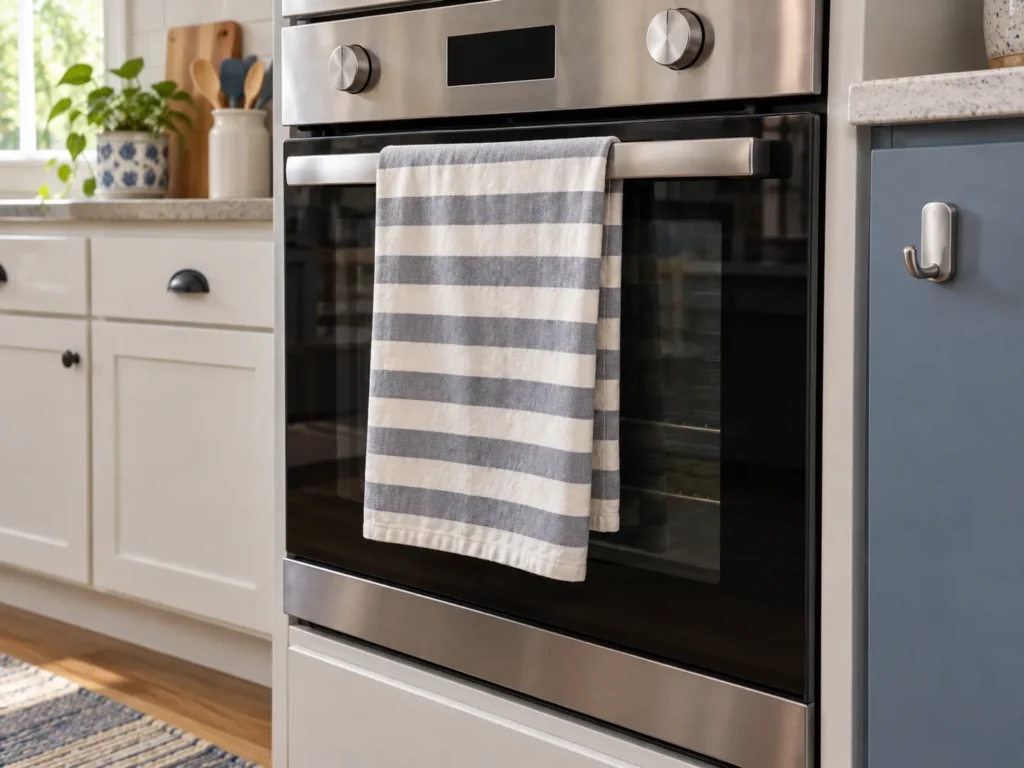
A towel on an oven handle is not automatically dangerous. Ovens differ, and a clean towel hanging from a cool handle will not simply catch fire. Still, the oven is a heat-producing appliance in a busy part of the kitchen. Loose fabric can shift, become soiled, or end up closer to a hot surface than intended. Giving towels a separate place to hang is a small change that removes those avoidable concerns.
Why the Oven Handle Is So Tempting
The oven handle is often at a comfortable height and located near the countertop. When you are washing your hands, preparing ingredients, drying a dish, or wiping up a splash, reaching for a towel there feels natural. If you always return it to the same place, you rarely have to search for it.
Convenience is the reason this habit lasts, but it can also make the towel easy to misuse. A towel left near the oven may become the one you reach for to dry your hands, wipe a counter, and grab a hot dish. Those jobs do not all call for the same piece of fabric. Its handy location can hide how many different tasks it has performed since it was last washed.
Heat and Loose Fabric Are the Main Concerns
Heat does not stay entirely inside an oven while it runs. The door and nearby surfaces may become warm or hot, depending on the appliance, cooking temperature, and length of use. Some oven handles remain relatively cool; others may warm up. For that reason, it would be misleading to claim that every towel on every oven door faces the same level of risk.
The placement of the towel matters as much as the handle temperature. A long towel can hang low, slip as the door opens, or become caught when the door closes. Fabric that falls or brushes against a hot component creates a different situation from fabric resting neatly on a cool handle. Opening the oven also releases hot air, so reaching around a dangling towel at that moment may be awkward.
A clean cotton towel will not ignite merely because it is near a working oven. Fabric can burn, however, when it comes into contact with sufficient heat or an open flame. A towel is more concerning if it hangs near a stovetop burner, becomes trapped against a hot surface, or falls where it should not. Keeping it on a hook away from cooking appliances is a simple precaution.
Both electric and gas kitchens call for attention to loose fabric. An electric oven has hot heating components, while gas cooking equipment may involve open flames. The practical advice is the same in either setting: keep towels away from burners, hot elements, and surfaces where they might shift unexpectedly.
Grease and Food Residue Add Another Problem
Kitchen towels can collect more than water. A towel used during meal preparation may pick up grease, crumbs, food residue, or spills even when it does not look noticeably dirty. Fabric can hold onto those materials, and a towel hanging near the cooking area may be exposed to more splashes over time.
A greasy towel is a poor choice to keep near heat or flame. The concern is not that an invisible trace of cooking grease will make a towel burst into flames. It is that a heavily soiled piece of combustible fabric belongs in the laundry, not close to a heat source. If a towel feels greasy or has been used to clean up cooking spills, change it rather than continuing to hang and reuse it.
One Towel Shouldn’t Do Every Job
Using the same towel to dry clean hands, wipe a countertop, clean up a spill, and dry dishes makes it harder to keep those tasks separate. A damp or dirty towel can transfer residue to whatever it touches next. This is particularly important during food preparation, when hands and surfaces may need cleaning between handling different ingredients.
A manageable system does not require a collection of specialized gadgets. Keep a clean towel for drying washed hands and another for clean dishes if needed. Use a separate cloth for spills, and change any towel that becomes damp, greasy, visibly dirty, or contaminated with raw-food juices. How often towels need washing depends on what they have been used for; appearance alone is not always a reliable guide.
Hot cookware calls for a different tool altogether. Properly insulated oven mitts or pot holders are designed for handling hot dishes. An ordinary tea towel can slip, bunch up, leave part of your hand exposed, or become damp. A damp towel is especially unsuitable for gripping a hot pan because moisture can transfer heat quickly to your hand.
A Better Place to Keep Kitchen Towels
The best alternative is simply a dedicated spot that stays away from heat. A hook on a cool section of cabinetry, a wall-mounted towel rack, or a cabinet-mounted bar can keep a working towel easy to reach. Store unused clean towels in a drawer so a fresh one is available whenever the current towel needs changing.
Choose a location that suits the way you work. A hand towel belongs near the place where you wash your hands, provided it will not hang against a burner or another hot appliance. The point is not to move towels so far away that they become inconvenient. It is to keep them accessible without treating the oven door as permanent storage.
Decorative towels deserve a spot of their own, too. A patterned towel draped over an oven handle may look appealing, but it can still slip or collect cooking residue. Hanging it away from the cooking area keeps it visible without putting it in the path of everyday meal preparation.
Frequently Asked Questions
Is a towel on the oven door always dangerous?
No. The circumstances depend on the oven, whether it is in use, and where the towel hangs. A dedicated hook away from heat is still a sensible everyday choice because it prevents the towel from being left there when conditions change.
Can an oven handle become hot?
Handle temperatures vary by appliance and use. Do not assume that every handle stays cool, particularly during long or high-temperature cooking. Pay attention to how your own oven behaves and follow its instructions.
Should I use a folded kitchen towel to remove a hot baking dish?
Insulated oven mitts or pot holders are the more reliable choice. A folded towel may shift while you lift the dish and may not protect your hand evenly, especially if it is damp.
Can a greasy towel catch fire?
Fabric can burn if it reaches a flame or sufficiently hot surface, and a greasy, heavily soiled towel is particularly unwise to keep near cooking heat. Wash it before using it again.
How often should kitchen towels be changed?
Change them according to use rather than relying on a fixed schedule. A towel that is damp, dirty, greasy, or exposed to raw-food juices should be replaced with a clean one. Keeping spare towels nearby makes that easier.
Where should a towel hang instead?
A hook or towel bar on a cool wall or cabinet keeps it within reach and away from the oven, stovetop, and other heat sources.
What if the oven is turned off?
If the appliance is completely cool, the immediate heat concern is lower. The drawback is that a towel left on the handle can be forgotten when the oven is turned on later. A permanent towel spot elsewhere avoids having to remember to move it.
The Bottom Line
The oven door handle is convenient, but convenience alone does not make it the best towel rack. Heat, shifting fabric, grease, and repeated use for unrelated kitchen tasks are all good reasons to choose another spot. None of this means a towel on the handle is certain to cause an accident; it means there is an easy way to avoid a few unnecessary risks.
Hang clean towels on a dedicated hook, change them when they become damp or soiled, and use oven mitts for hot cookware. It is a small adjustment that keeps useful towels close at hand while giving them—and the oven—their own proper places in the kitchen.