
Kitchens of the past had a character all their own. Meals were frequently prepared from scratch, seasonal foods were preserved for later, and nearly every utensil served a specific purpose. Many of the tools found in those kitchens have since been replaced by electric appliances, disposable packaging, and convenient store-bought products.
Younger generations might walk past some of these objects at an antique store without knowing what they are. For people who spent time in a parent’s or grandparent’s kitchen, however, their shapes, sounds, and uses can bring back memories almost immediately. A hand crank turning against a countertop, a bread box opening before breakfast, or a wooden butter mold resting near the sink can recall an entire way of life.
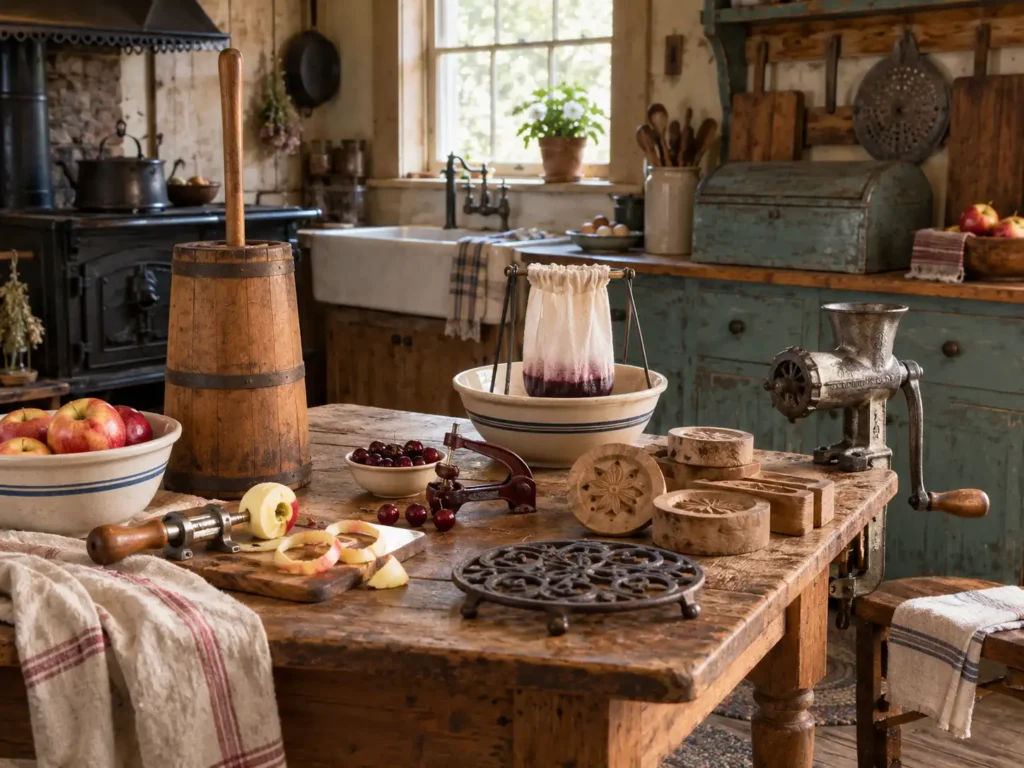
Old-fashioned kitchen tools are more than curious pieces of equipment. They show how families cooked before automatic settings and digital controls became common. They also reflect the patience, practical knowledge, and resourcefulness required to prepare everyday food with simple materials.
Why Were Old Kitchen Tools So Different?
Earlier home cooks depended on manual tools made from materials such as cast iron, tin, glass, and wood. These objects were generally designed for repeated use rather than quick replacement. A sturdy grinder, press, or mold could remain useful for decades when it was cleaned and maintained properly.
Many tools also reflected the work that took place in the home. Instead of buying every ingredient ready to use, families might grind meat, churn cream, prepare fruit, preserve seasonal produce, or shape fresh butter themselves. Each job called for a particular utensil, and learning to use it efficiently was part of becoming an experienced cook.
These tools rarely offered shortcuts. The person using them had to pay attention to resistance, texture, temperature, and appearance. Good results came through observation and practice. That hands-on relationship with food is one reason many people remember older kitchens with such affection.
Butter Churns
A butter churn was used to agitate fresh cream until the fat separated from the liquid and gathered into butter. Churns appeared in several forms, including tall wooden containers with plungers and glass jars fitted with hand-cranked paddles. The process required steady effort and could not be rushed.
Once the butter formed, it still needed to be collected, washed, and worked into the desired consistency. For families accustomed to buying butter in neatly wrapped packages, the amount of labor involved can be surprising. Older cooks often remember the churn as both an ordinary household tool and a symbol of food made entirely by hand.
Hand-Crank Meat Grinders
Heavy manual meat grinders were commonly attached to the edge of a sturdy table or counter with a clamp. Pieces of beef, chicken, or turkey were placed in the top opening and pushed toward an internal blade. Turning the handle forced the meat through a perforated plate, producing an even grind.
These grinders gave cooks direct control over the meat they prepared. Different plates could create finer or coarser results, depending on the dish. The machines were durable, but cleaning every component required care because small pieces of food could remain around the blade, plate, or screw mechanism.
Cast-Iron Trivets
Cast-iron trivets protected tables, countertops, and other surfaces from hot pots and pans. Many featured decorative openwork patterns, small feet, and sturdy frames. Although their purpose was practical, their designs often made them attractive enough to leave on display.
Modern kitchens still use trivets, but older cast-iron examples have a distinctive weight and appearance. Some were sized for a single pot, while larger versions could support substantial cookware. Their combination of usefulness and craftsmanship helps explain why so many have survived.
Manual Kitchen Presses
Before specialized electric equipment became widely available, sturdy manual presses helped cooks process different foods. Depending on the design, a press could squeeze fruit, extract liquid, or compress cooked ingredients. Pressure was applied through a lever, screw, or hand-operated mechanism.
These devices were often heavy because they needed to remain stable during use. Their simple mechanical construction made them effective, but operating them took strength and patience. Today, an unfamiliar kitchen press can be difficult to identify without seeing its individual parts assembled.
Tin Bread Boxes
The bread box was once a familiar feature on the kitchen counter. It provided a dedicated place for storing loaves, rolls, and other baked goods while helping protect them from dust and household pests. Many were made from painted tin, although wooden and enamel-coated versions were also used.
Bread boxes did not refrigerate their contents. Instead, their enclosed design helped create a practical storage environment while keeping the kitchen organized. Vintage examples often carry signs of daily life, including worn handles, faded lettering, small dents, and layers of carefully applied paint.
Jelly Bag Strainers
Making clear fruit jelly required separating juice from cooked fruit pulp. A jelly bag strainer held a cloth bag above a bowl so the liquid could drain slowly. The cook had to resist squeezing the bag if a clear finished jelly was desired, since pressure could push fine pulp into the juice.
This modest tool played an important role during preserving season. It allowed home cooks to work with apples, berries, grapes, and other available fruits. The waiting involved in straining was simply part of the process, much like sterilizing containers and preparing the kitchen for a full day of preserving.
Cherry Pitters and Apple Corers
Specialized fruit tools saved time when large quantities of seasonal produce needed to be prepared. A cherry pitter removed the stone while leaving most of the fruit intact. An apple corer cut out the firm center, making apples easier to slice for pies, sauces, drying, or preserves.
These utensils may seem highly specific, but that specialization made sense in homes where food preservation was a regular task. Processing a basket of fruit by hand could take hours, so even a simple mechanical aid made a noticeable difference.
Wooden Butter Molds
Wooden molds gave freshly prepared butter a uniform shape and an attractive finish. The inside surface was sometimes carved with flowers, leaves, geometric patterns, or other decorative designs. When the butter was pressed firmly into the mold and released, the pattern appeared on its surface.
These molds demonstrate how earlier kitchenware could combine function with beauty. A basic food prepared at home became more presentable without requiring elaborate equipment. Surviving molds are now appreciated for their carved details as well as the domestic history they represent.
Why These Tools Deserve to Be Remembered
Vintage kitchen utensils reveal how closely cooking was once connected to seasonal routines and household skills. Food preparation involved more than assembling packaged ingredients. It could begin with raw cream, whole fruit, or fresh cuts of meat and continue through several careful stages before anything reached the table.
The tools also reflect an approach that valued maintenance and reuse. A dependable utensil was cleaned, repaired when possible, and kept for the next task. Its wear marks became evidence of years of service rather than a reason to discard it.
Antique markets, estate sales, and family cupboards still hold many of these pieces. Some remain practical, while others are better suited for display because of their age or condition. Anyone considering using vintage kitchenware should inspect it carefully for rust, cracks, loose components, damaged coatings, or surfaces that may no longer be suitable for contact with food.
Rediscovering the Stories Behind the Tools
Recognizing an old utensil can bring back vivid memories: bread stored before breakfast, fruit prepared at the kitchen table, or the sound of a metal handle turning while dinner was being made. Even people encountering these objects for the first time can appreciate the thought and labor built into their designs.
Asking older relatives about the tools they used can uncover more than the name of an unfamiliar object. It may lead to family recipes, practical cooking lessons, and stories about how meals were prepared and shared. In that sense, old-fashioned kitchen tools continue to serve a purpose. They connect everyday objects with the people, traditions, and memories that once filled the kitchen.