
Heavy whipping cream is the usual choice for making a rich, fluffy dessert topping. Its high fat content allows it to trap air, expand in volume, and form peaks that remain stable long enough to decorate pies, cakes, fruit, and other treats.
But what happens when there is no heavy cream in the refrigerator and the only creamy ingredient available is a can of evaporated milk? Because evaporated milk is thicker and more concentrated than ordinary milk, it seems reasonable to wonder whether chilling and whipping it could produce similar results.
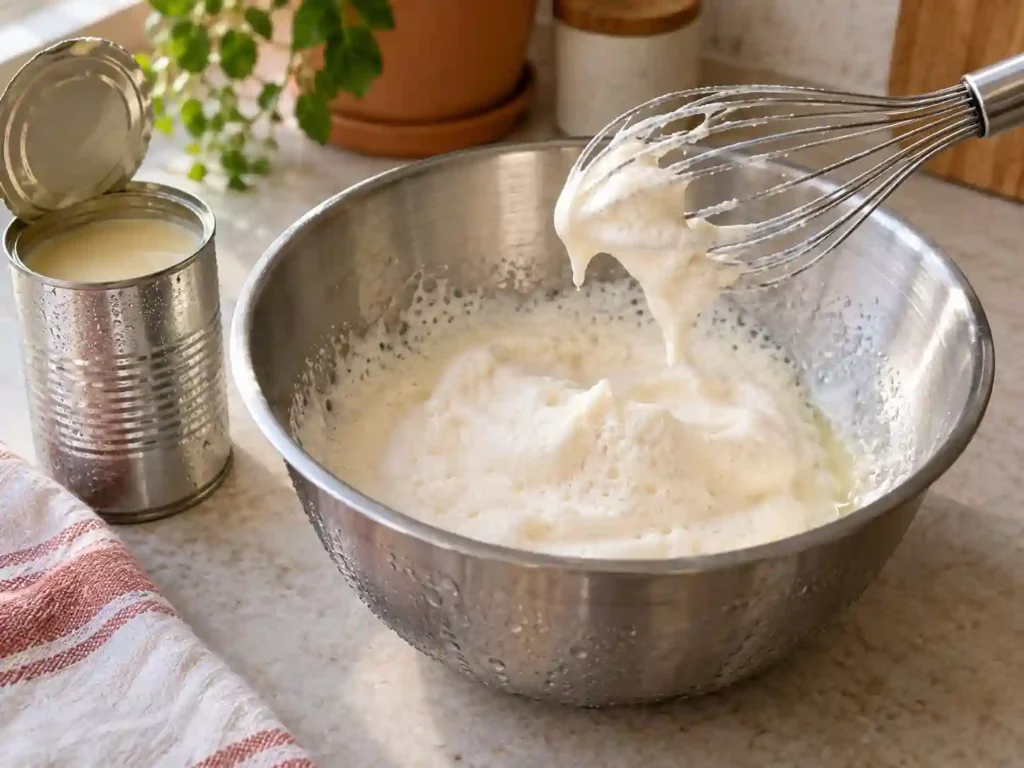
The short answer is that ice-cold evaporated milk can become surprisingly light and foamy. It can even increase considerably in volume. However, after 10 minutes of whipping, it does not behave exactly like traditional whipped cream. The final texture is softer, less rich, and much more delicate.
Why Evaporated Milk Seemed Worth Trying
Evaporated milk is regular milk from which a substantial portion of the water has been removed through heating. The result is a shelf-stable product with a creamier consistency and a more concentrated dairy flavor than fresh milk.
It works well in soups, sauces, casseroles, custards, and many baked dishes. Its thicker body makes it a useful pantry ingredient, but it contains much less fat than heavy whipping cream. That difference immediately raised an important question: could extreme cold help it hold enough air to form a usable whipped topping?
Cold temperatures help many dairy mixtures whip more effectively because they slow the movement of the fat and liquid. Even so, temperature cannot create fat that is not present. This experiment would reveal how much chilling could accomplish—and where the limitations of evaporated milk would become obvious.
Preparing the Milk and Equipment
For the best chance of success, the evaporated milk, mixing bowl, and whisk attachment all need to be very cold. The safest approach is to refrigerate the can thoroughly before opening it. The milk can then be poured into a metal mixing bowl and placed in the freezer briefly, just until it becomes extremely cold and begins forming tiny ice crystals around the edges.
A sealed can should not be left in the freezer. Its contents can expand if they freeze, potentially damaging the container. Chilling the opened milk in a bowl provides better control and makes it easier to see when the right temperature has been reached.
Placing the clean metal bowl and whisk attachment in the freezer for about 15 minutes also helps keep the mixture cold during whipping. Once everything is ready, the milk should be whipped immediately before it has time to warm.
What Happened During the First Few Minutes
When the cold evaporated milk was poured into the chilled bowl, it appeared noticeably thinner than heavy cream. At medium speed, it initially moved around the bowl without showing much change.
After a minute or two, small bubbles began appearing across the surface. The milk gradually became paler and more aerated as the whisk incorporated air. This early froth looked promising, but it remained closer to milk foam than whipped cream.
Increasing the mixer speed encouraged more volume. The mixture became noticeably lighter, and the bubbles grew finer and more evenly distributed. At this point, the cold temperature was clearly helping the milk retain air, even though no defined peaks had formed.
The Five-Minute Mark: Plenty of Foam, Little Structure
By five minutes, the evaporated milk had expanded considerably. It looked airy and abundant in the bowl, with a texture resembling thick cappuccino foam.
Lifting the whisk created brief, soft shapes, but they collapsed almost immediately. The mixture had enough air to appear fluffy, yet it lacked the structure needed to support itself. It could be spooned onto a drink or dessert for immediate serving, but it would not hold a piped shape or create a dependable layer in a cake.
Continuing to whip added a little more body, but the transformation began to slow. Unlike heavy cream, which moves through recognizable stages from liquid to soft peaks and then firm peaks, the evaporated milk remained trapped in a delicate foamy stage.
After 10 Minutes: Did It Become Whipped Cream?
At the 10-minute mark, the mixture was still light, pale, and expanded. It was thicker than it had been at the beginning, but it never formed the glossy, stable peaks associated with properly whipped heavy cream.
A spoonful briefly held a soft mound before settling back into the bowl. After standing at room temperature, the foam began to lose volume, and a thin layer of liquid collected underneath. The separation confirmed that the airy texture was temporary.
The experiment was not a complete failure. The milk had successfully transformed into a light foam that could be useful in certain situations. It simply did not become a direct replacement for traditional whipped cream.
How the Flavor and Texture Compared
Whipped evaporated milk feels light on the tongue and has a mild dairy sweetness. Its flavor is more concentrated and cooked than that of fresh cream, which some people may recognize as a characteristic canned-milk taste.
Heavy whipped cream is richer, smoother, and more velvety. It can form defined peaks and maintain its shape for much longer, especially when kept cold. Evaporated milk foam is thinner and less luxurious, with a texture that begins fading soon after whipping.
That flavor difference may be unimportant in coffee, cocoa, or a strongly flavored dessert. It can be more noticeable when the topping is paired with something delicate, such as fresh berries or a lightly flavored cake.
Why Evaporated Milk Cannot Hold Firm Peaks
The main difference comes down to fat. Heavy whipping cream contains enough milk fat to build a supportive network around the air bubbles created by the whisk. As the cream is beaten, that network becomes strong enough to hold the bubbles in place and create stable peaks.
Evaporated milk contains far less fat. Whisking can still force air into it, especially when the milk is extremely cold, but there is not enough fat to stabilize that air for long. The bubbles gradually combine or escape, causing the foam to collapse and release liquid.
This is why additional mixing does not solve the problem. Once the mixture reaches its maximum aeration, another several minutes of beating cannot give it the internal structure of heavy cream.
When This Evaporated Milk Trick Can Be Useful
The foam works best when it will be served immediately and does not need to support weight or preserve a decorative shape. It can add a light, creamy finish to hot cocoa, coffee, pudding, fruit, or an informal dessert eaten soon after preparation.
A small amount of powdered sugar can sweeten the mixture and add a little body. Vanilla extract may improve the flavor, although it should be used sparingly so the added liquid does not unnecessarily thin the foam. Both additions are best incorporated after the milk has begun increasing in volume.
The mixture is not dependable for piping decorations, filling pastries, frosting layered cakes, or topping a pie that must sit for an extended period. Those uses require a stable cream capable of holding its shape.
Better Last-Minute Alternatives
When heavy cream is unavailable, the best replacement depends on the dessert. Chilled full-fat coconut cream can often be whipped into a thick topping, although it brings a noticeable coconut flavor and may vary in consistency by product.
Thick Greek yogurt offers a creamy, spoonable topping with a tangy flavor. It does not imitate whipped cream, but it holds its shape better than evaporated milk foam and pairs naturally with fruit, cakes, and other simple desserts. Sweetening it with powdered sugar or honey can soften its tang.
For desserts that truly depend on firm whipped peaks, obtaining heavy whipping cream or using a purpose-made whipped topping remains the most reliable choice. A substitute should be selected for the role it needs to perform rather than for appearance alone.
The Final Result
After 10 minutes of mixing, the ice-cold evaporated milk became pale, airy, and impressively foamy—but it never turned into true whipped cream. Its soft mounds disappeared quickly, the mixture began separating as it warmed, and the flavor remained distinctly different from fresh cream.
The trick is useful when a light, temporary foam is all that is needed. It is not a dependable one-for-one substitute for heavy whipping cream in desserts requiring richness, firm peaks, or lasting structure. Chilling makes evaporated milk whip better, but it cannot overcome the fundamental difference in fat content.